
The Warm Handoff: Why AI Should Brief Your Staff, Not Replace Them
Smart businesses use AI to multiply human effectiveness, not eliminate it. Here's why the warm handoff beats full automation every time.
Here's what kills me about the AI conversation in business right now.
Everyone's obsessed with replacement. Fire the receptionist. Eliminate the customer service team. Cut payroll. That's the pitch you hear from half the technology vendors out there.
Wrong game. Wrong goal. Wrong everything.
The smartest operators aren't using AI to replace people. They're using it to brief people. To prepare them. To hand them opportunities on a silver platter with full context, ready to close.
That's the warm handoff. And if you're not thinking about automation this way, you're missing the entire point.
The Real Cost of Missed Calls
Let's start with the problem nobody wants to admit.
Small businesses miss 40% of incoming calls. Not sometimes. Routinely. Your phone rings while you're with a customer, on a job site, or God forbid, eating lunch. That call goes to voicemail.
And here's the kicker: only 20% of people leave a message.
Do the math. You're losing 32% of your potential customers before you even know they exist. They hang up. They call your competitor. They're gone.
For the average small business, that's $500 per month in lost revenue. Conservative estimate. Home service businesses? Try $12,600 monthly. Real estate agents? Up to $100,000 annually.
But the dollar amount isn't even the worst part.
Nearly half of potential customers move on to a competitor after one unsuccessful call attempt. One. You get one chance. Miss it, and they're somebody else's customer now.
And 76% of consumers will stop doing business with you after a single bad experience. Want to know what counts as a bad experience? Not answering your phone.
Why Full Automation Is a Trap
So the technology vendors swoop in with their solution: Let AI answer everything.
Fire the human. Put in the robot. Problem solved.
Except it's not solved at all.
Sixty-four percent of customers would prefer companies didn't use AI for customer service. That's from Gartner, surveying thousands of consumers in 2024.
Why? Because they've been burned by terrible automation.
You know the experience. Call a company. Get trapped in menu hell. "Press 1 for this. Press 2 for that." None of the options match your actual problem. You start yelling "REPRESENTATIVE" at your phone like a lunatic.
The system either doesn't understand you or pretends not to. Finally, after ten minutes of frustration, you hang up and write a one-star review.
That's what happens when you automate without intelligence. When you remove humans instead of empowering them.
Here's the truth: 75% of consumers prefer an authentic human voice over a perfectly crafted brand message. They want efficiency, but they also want empathy. Speed, but also understanding.
The warm handoff gives them both.
How the Warm Handoff Actually Works
Think of AI as your front desk person who never sleeps, never takes a break, and never misses a call.
It answers the phone. Every time. In three seconds or less.
For routine questions, it handles them. "What are your hours?" "Do you take insurance?" "Where are you located?" Done. Instantly.
For everything else, it collects information. Listens to the customer. Asks qualifying questions. Understands the situation.
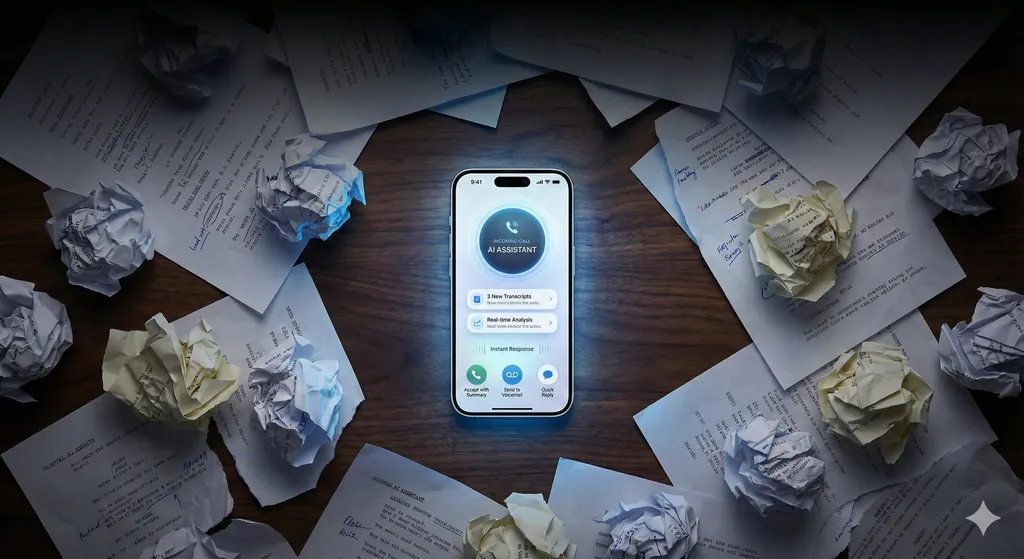
Then—and this is the critical part—it briefs your actual team member before transferring the call.
"John, you've got Sarah on the line. She's a homeowner in Riverside. Her water heater failed this morning. She's getting quotes from three companies. She needs someone there today and her budget is $3,000 to $5,000. She mentioned her neighbor used us last year and recommended us. I'm transferring her to you now."
Your guy picks up the phone already knowing everything. He doesn't make Sarah repeat herself. He doesn't waste time on discovery. He goes straight to solving her problem and closing the deal.
That's a warm handoff.
The Numbers Don't Lie
Companies implementing this approach are seeing results that ought to make every business owner pay attention.
Klarna's AI handled 2.3 million customer conversations in one month. That's the equivalent of 700 full-time agents. Resolution time dropped from 11 minutes to 2 minutes. Cost reduction: 45%.
But here's what matters: they didn't fire their customer service team. They freed them to handle complex issues that require judgment. The AI handles routine questions. Humans handle relationships and problem-solving.
Verizon implemented a similar system. Ninety-five percent of customer queries can now be comprehensively answered by their representatives because the AI briefs them with the right information instantly. Sales increased 40% because agents have time to actually sell instead of scrambling to find basic information.
A software company with 3,000 monthly support tickets went hybrid. AI handles password resets and basic questions. Humans get the complex technical issues. Result: 35% cost reduction and customer satisfaction jumped from 78% to 89%.
Let me say that again. They cut costs by a third and made customers happier.
That's the power of intelligent systemization.
The 60-70 Rule
Here's the pattern that shows up everywhere.
Sixty to seventy percent of customer inquiries are routine. They don't require human judgment. They're questions with straightforward answers. "What's my account balance?" "When will my order ship?" "Do you have this in blue?"
AI excels at this work. It's faster. It's available 24/7. It never gets tired or makes mistakes.
The other 30 to 40 percent? Those need a human.
Complex problems. Frustrated customers. High-value negotiations. Situations requiring empathy, creativity, or judgment calls.
The warm handoff model addresses both categories optimally.
AI handles the majority of calls instantly. Customers get immediate answers to simple questions. No hold time. No waiting.
Then AI routes the complex calls to your team with full context. Your people focus on work that actually requires human intelligence.
What Makes a Good Handoff
Not all warm handoffs are created equal.
The best systems provide your team with five critical pieces of information:
Customer history. Who is this person? Have they bought from you before? What's their account worth?
Full conversation transcript. What did they already tell the AI? What questions did they ask?
Emotional context. Are they frustrated? Urgent? Just browsing?
Preliminary diagnosis. What category does this problem fall into? Billing issue? Technical problem? Sales inquiry?
Recommended action. Based on your business rules, what should happen next?
Your staff member picks up the phone knowing more than they would from 10 minutes of discovery questions. They're prepared. They're effective. They close more deals and solve more problems.
Warm transfers boost first-call resolution rates by 15 to 20 percent. That's money in the bank.
The Staff Perspective
Here's something nobody talks about: your employees prefer this system too.
Traditional customer service work burns people out. Answering the same questions 50 times a day. Getting yelled at by frustrated customers. Handling mind-numbing routine tasks.
The hybrid model changes the job.
Your staff spends time on interesting problems. They help people with complex situations. They build relationships. They use their judgment and expertise.
One company reported that team morale improved when they went hybrid because agents focused on challenging, meaningful work instead of repetitive inquiries.
Delegate or stagnate. That's been my rule for 40 years.
But smart delegation doesn't mean abdication. It means you handle the high-value work and systematize everything else.
AI lets you systematize customer contact without losing the human element that actually wins and keeps customers.
The Control Factor
I can hear some of you thinking: "But I need to control quality. How do I know the AI won't screw something up?"
Valid concern. Wrong solution.
The answer isn't to avoid automation. The answer is to implement it correctly.
With a warm handoff system, you maintain control at every step.
You script the AI's responses for common questions. You set the qualification criteria for what gets transferred to humans. You monitor calls and adjust the system based on what you learn.
The AI becomes an extension of your standard operating procedures. It enforces your business rules. It ensures consistency.
And because it briefs your team before transferring calls, you actually have MORE quality control than you did before.
Think about it. When a call comes in cold, your receptionist or service person might be having a bad day. They might forget to ask a qualifying question. They might not capture important information.
The AI asks every question, every time. It follows the script. It captures the data.
Then your human team member takes over with everything they need to deliver exceptional service.
The Migration Path
You don't flip a switch and go from human-only to hybrid overnight.
Start simple. Let AI handle after-hours calls. Your phone rings at 9 PM? AI answers, qualifies the lead, and schedules a callback for the next morning. You wake up to a list of opportunities with full context.
Once that's working, expand to overflow handling. AI covers calls when your team is busy or on other lines. Nobody gets voicemail anymore.
Then let AI take over the genuine routine inquiries. Hours, directions, pricing for standard services. The stuff that doesn't require judgment.
Finally, implement the full warm handoff for complex calls. AI does discovery, qualification, and briefing. Humans close deals and solve problems.
The progression takes 60 to 90 days if you do it right. And at every stage, you're measuring results and adjusting the system.
The Bottom Line
Your competitors are missing 40% of their calls right now.
Their customers are getting frustrated and leaving.
Their staff is drowning in routine inquiries and missing opportunities to build relationships.
You can be different.
Not by replacing your team with robots. By giving them a tool that makes them 10 times more effective.
AI that briefs instead of replaces. That qualifies instead of eliminates. That multiplies human effectiveness instead of substituting for it.
That's the warm handoff.
That's intelligent systemization.
And that's how you build a business that captures more opportunities, serves customers better, and doesn't burn out your staff in the process.
The choice is yours. Keep missing calls. Or implement a system that ensures every customer gets an instant response and your best people handle what matters most.
What's it going to be?
Ready to Never Miss Another Call?
Start your free trial with Julya AI and turn every ring into revenue.
Get Started for FreeRelated Articles

The 3 AM Test: How to Book Appointments While You Sleep (Without Waking Up)
40% of appointments happen after hours. Miss those calls and you're leaving $126K on the table. Here's how to capture every lead-even at 3 AM.

From Chaos to Calendar: Stopping the Double-Booked Disaster Before It Happens
Double-booking costs businesses $26,000 yearly. Here's how smart scheduling prevents conflicts, saves revenue, and stops customers from rage-quitting.
Scripts Are Dead: How Website-Trained AI Handles Complex Calls Better
Small businesses lose $126k yearly from missed calls. AI trained on your website answers instantly, no scripts needed. Setup takes under 5 minutes.